News
Nature Publication on Animal Research Ethics
2 Dec, 2025
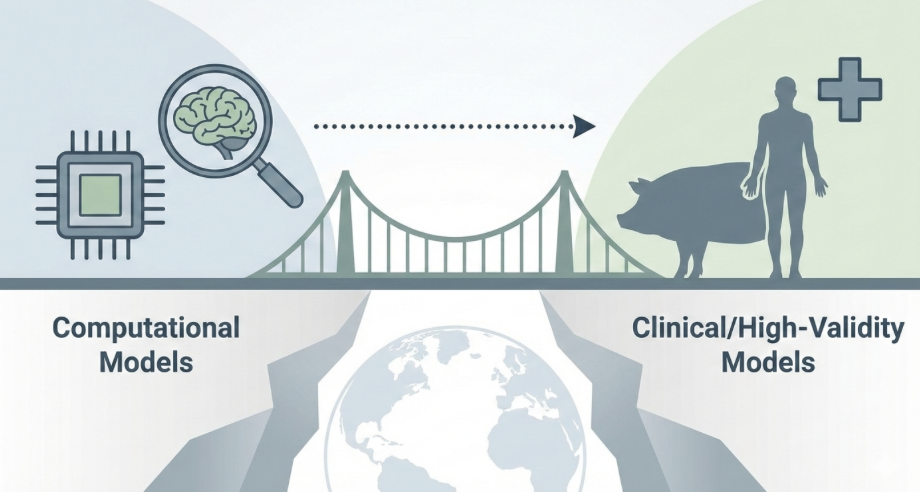
A recently published Nature commentary (December 2025) argues that alternatives to animal research, such as organ-on-a-chip systems or AI models, are not inherently more ethical, as their reliability falls short of rigorously overseen animal studies. The authors emphasize that researchers treat animals with empathy, and the real moral challenge lies in prolonging human suffering through inadequate NAMs that could yield misleading results. This bolsters the ethical foundation of animal research based on the 3Rs principles (Replacement, Reduction, Refinement), as practiced by our research group. The article can be found here.
Award-winning research in the lab
28 Nov, 2025
Adrienn Ingrid Vörös received 2nd place at the Scientific Students’ Conference on 28 Nov 2025 for her project titled “A quantitative study of the relationship between motivation and performance.
New Assay Fixes Critical Flaw in Gene Therapy Screening
29 Sept, 2025
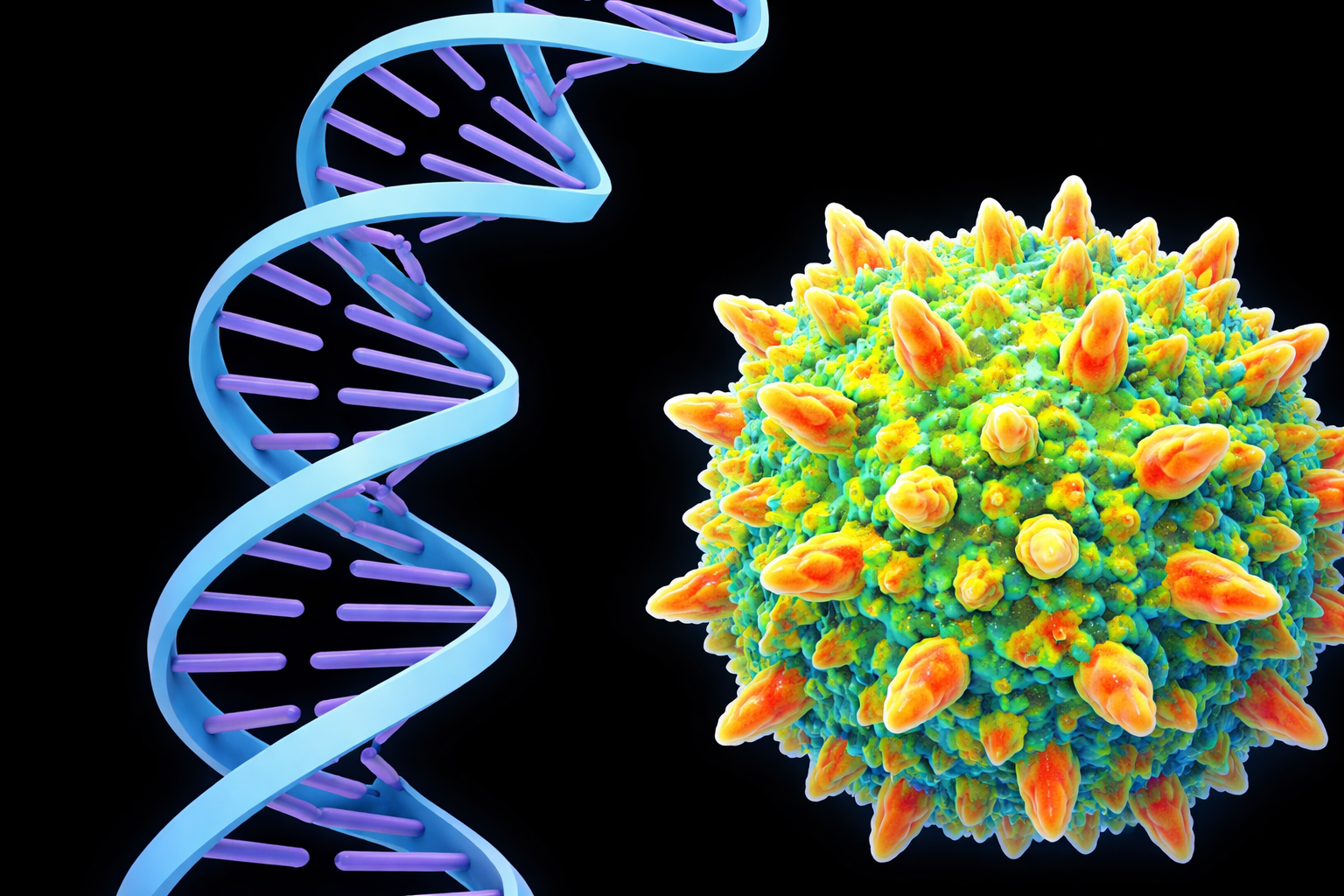
In a study published in Nature Gene Therapy, our lab has developed a new method that significantly improves the safety and accuracy of screening for AAV gene therapies. This new ‘Constant Serum Concentration’ (CSC) assay addresses a critical flaw in current screening processes, which can fail to detect low but clinically significant levels of neutralizing antibodies (NAbs) that block a therapy’s effectiveness. Our study demonstrated that the CSC assay correctly identifies up to 21.7% more patients with these therapy-blocking antibodies than conventional methods, preventing individuals from being incorrectly deemed eligible for treatment. By providing a more reliable framework for patient selection and understanding long-term immunity, our publicly available protocol promises to lower therapy failure rates, enhance the robustness of clinical trial data, and accelerate the development of safer and more effective gene therapies worldwide.
The article published in Nature Gene Therapy can be found here.
A diagnostic method for the development of gene therapies
21 Aug, 2025 In a publication in the leading journal Frontiers in Immunology, our lab has introduced coreTIA, a pioneering open-source diagnostic method designed to accelerate the development of gene therapies. A major challenge in this field is that pre-existing antibodies can neutralize these expensive treatments, but testing for them has been hampered by a lack of standardized, reliable tools. Our coreTIA method solves this by providing the first universally accessible and validated protocol to accurately measure these antibodies in blood samples across multiple species, including humans. By making this tool freely available, we aim to establish a global diagnostic standard, helping to overcome the scientific ‘reproducibility crisis’ and shorten the path for getting safe and effective therapies from the lab to patients who need them. The article published in Frontiers in Immunology can be found here.
Research Camp at TTK with the Contribution of the Lab’s Human Research Team
14-18 July, 2025
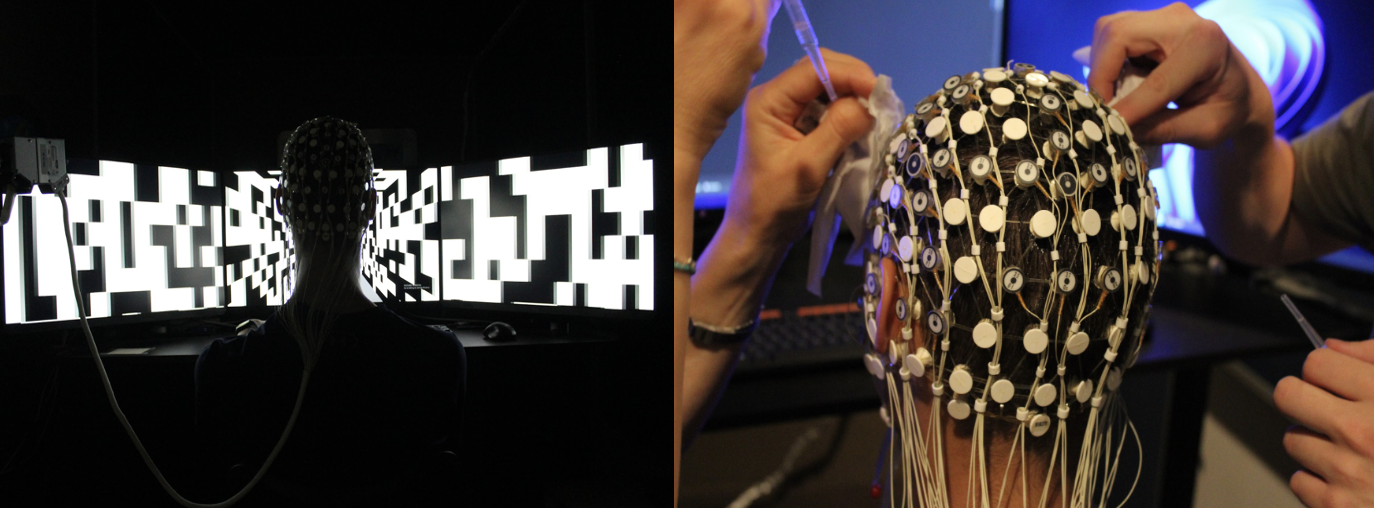
With the support of Richter Gedeon Nyrt., the Természettudományi Kutatóközpont organized a summer camp for highly talented high school students interested in the natural sciences. The Hillier laboratory hosted two students, who learned about the theoretical and practical foundations of the group’s human experiments and also participated as study subjects. By contributing to the interpretation and processing of the measurements performed on them, they gained a comprehensive understanding of this aspect of the research group’s work.
Patient–Researcher Dialogue with László Joszt
21 May, 2024 László Joszt, a Vision Rehabilitation Teacher with lived experience of blindness, visited the Hillier Lab and shared his personal story of losing his vision, creating an opportunity to exchange hopes and perspectives on blindness and vision restoration from both sides.
Understanding Brain Dysfunction in Amblyopia Using Large-Scale Multimodal Recordings
2 Nov, 2023 HUN-REN TTK and TINS invited all interested parties for a series of short talks that reported about the latest results of the Hillier lab.
1st prize at the national scientific student conference
5 May, 2023 Csikós Klaudia won 1st prize at the National Scientific Student Conference in the Biology section for her work on the development of a modular implant system and preclinical validation through multimodal brain activity studies, highlighting her creativity, dedication, and significant contribution to the group.
Advances in Understanding Visual Processing from Retina to Brain
14 Sept, 2022 This editorial, published in Frontiers, introduces a Research Topic featuring eight papers that explore the mammalian visual system across multiple species including mice, rats, cats, macaques, and humans, spanning from retinal processing to cortical mechanisms. The collection examines intrinsically photosensitive retinal ganglion cells and their survival mechanisms, the effects of low-dose atropine on visual signal processing, optical coherence tomography for imaging human retinal layers, and computational modeling of the cortico-pulvinar network in subcortical visual processing. Three papers investigate the primary visual cortex, exploring binocular matching during the critical period of visual development, methods for extracting retinotopic maps from imaging data, and how spatial attention modulates interactions between simple and complex direction-selective cells with non-overlapping receptive fields. The Research Topic also presents a new open-source Python tool for real-time pupil tracking across species, demonstrating the breadth of current visual neuroscience research from basic cellular mechanisms to computational approaches. The article published in Frontiers in Cellular Neurosicence can be found here.
NRDI Honors Students with UNKP Scholarships
6 Sept, 2022 Klaudia Csikos, Ábel Petik, Fanni Veres, and Anett Matuscsak (mentored by Dániel Hillier) receive the prestigious and highly competitive UNKP Scholarship offered by the National Research, Development, and Innovation Office (NRDI).
Hungarian-Led European Consortium Investigates Amblyopia
15 Dec, 2021 An international research consortium led by Visual Systems Neuroscience Research Group has been awarded €1.2 million in EU funding to investigate the neurobiological causes of amblyopia, one of the most common vision disorders. The three-year project, funded entirely through the European Research Area Networks (ERA-NETs) program, brings together research teams from Hungary (ELKH Natural Science Research Center’s Visual Systems Neurobiology group), Romania (Transylvanian Institute of Neuroscience in Cluj-Napoca), Belgium (KU Leuven and the NeuroElectronics Research Flanders institute founded by IMEC), and Norway (University of Oslo). Amblyopia, also known as “lazy eye,” affects approximately 200 million people worldwide and is the leading cause of monocular blindness, yet current treatments can only moderately reduce lifelong vision impairment. The consortium will use cutting-edge technologies including functional ultrasound imaging to map the brain networks responsible for maintaining amblyopia and determine their role in the disorder, conducting measurements in experimental animal models and, in collaboration with Semmelweis University’s Department of Ophthalmology, in patients diagnosed with amblyopia. You can read the article published on Hungary’s most-read news portal here.
Making blind retinas see again
5. June, 2020
Damage to photoreceptors in the retina is a common cause of blindness. In a new study, researchers developed a method to make damaged photoreceptors sensitive to light again using near-infrared technology.
The approach uses tiny gold particles that absorb infrared light and turn it into heat. These particles are linked to special heat-sensitive ion channels on retinal cells. When infrared light hits the gold particles, the heat activates the ion channels, allowing the cells to respond to light.
In experiments with mice that had retinal degeneration, the researchers successfully targeted this system to cone photoreceptors. The treated mice showed clear responses to near-infrared light in the retina and in the visual areas of the brain. By changing the size of the gold particles, the system can be adjusted to work with different infrared wavelengths.
The article published in Science can be found here.
The unique vision-restoring therapy will soon be tested in Hungarian patients. The Hungarian news published here.
Dániel Hillier wins “Lendület” Grant
16. June, 2020 Dániel Hillier and his research team have been awarded the Lendület grant by the Hungarian Academy of Sciences. Their project aims to answer the question: How can neurobiology help develop therapies for childhood eye disorders that disrupt the coordination between the two eyes? The title of the research project is: “Targeted identification of neural circuit mechanisms involved in binocular signal processing using genetic methods in the cat visual system.” The Lendület program supports the launch of new research topics and the creation of independent research groups, promoting both scientific excellence and the retention of talented young researchers in Hungary. Hillier’s work is expected to contribute to the development of vision-restoring therapies and advance research in visual neuroscience. Has been reported on the website of the Hungarian Academy of Sciences (MTA) <a href=”https://mta.hu/mta_hirei/a-hagyomanyos-okologiai-tudastol-a-molekulak-szerkezetenek-felterkepezeseig-az-mta-lendulet-programjanak-uj-nyertesei-110694” target=”_blank” Dániel Hillier and his research team have been awarded the Lendület grant by the Hungarian Academy of Sciences. Their project aims to answer the question: How can neurobiology help develop therapies for childhood eye disorders that disrupt the coordination between the two eyes? The title of the research project is: “Targeted identification of neural circuit mechanisms involved in binocular signal processing using genetic methods in the cat visual system.” The Lendület program supports the launch of new research topics and the creation of independent research groups, promoting both scientific excellence and the retention of talented young researchers in Hungary. Hillier’s work is expected to contribute to the development of vision-restoring therapies and advance research in visual neuroscience. Has been reported on the website of the Hungarian Academy of Sciences (MTA) here..news-item__media{
Unraveling how the retina shapes motion detection in the brain
22. May, 2017 In a new study, Dániel Hillier and colleagues reveal how the retina influences visual motion processing in the brain. They disrupted specific retinal circuits in mice and monitored activity in the primary visual cortex (V1), uncovering that some cortical responses rely directly on retinal input, while others are independent. The findings show that the brain combines signals from the sensory periphery with internal computations to interpret motion, highlighting two distinct pathways for visual-motion processing. The article published in Nature Neuroscience can be found here. The results were also featured by the National Geographic, bringing the research to a wider audience and highlighting the fascinating mechanisms of the visual nervous system. here.